Remote Editing. Close Collaboration.
As film production budgets have become tighter, remote editing workflows have become increasingly popular, but working remotely shouldn’t feel remote.
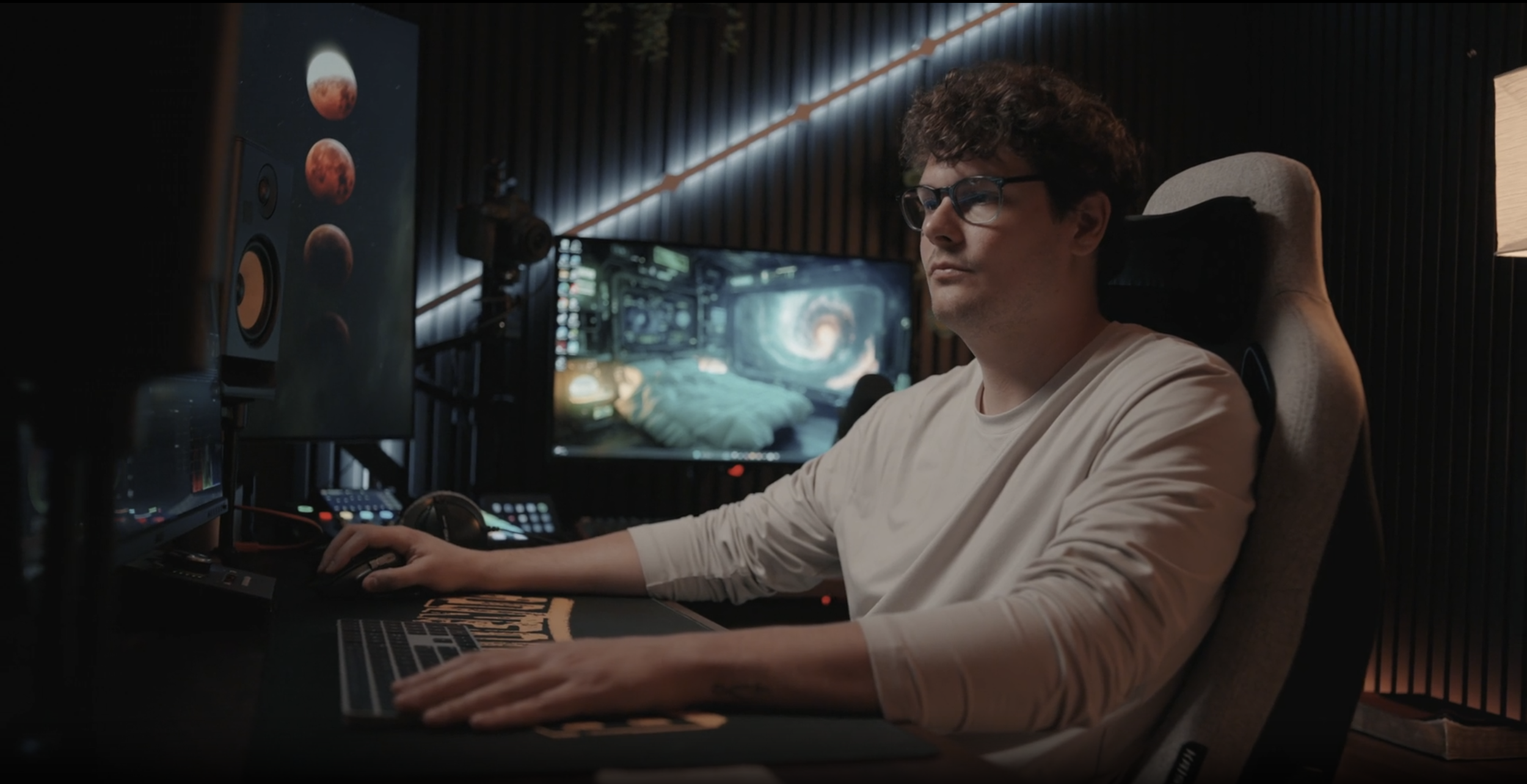
When The Maid of Orleans, an independent film starring Elle Fanning and Christopher Abbott, started principal photography in Paris this October, edit dailies created on set by Colorbox began making their way to Blue Table Post’s server in Brooklyn.
Assistant editor, Brian McCarthy, logged in remotely to his Avid System at Blue Table to set up the project while on another system, editor Blair McClendon (Aftersun, The Last Showgirl) could see the bins being created and filling up with clips. He was able to start viewing footage and begin the editorial process that would eventually lead to a film.
On a production like this, an editor might once have traveled to be near the shoot. Now the editor can be anywhere in the world—thousands of miles from both the set and the post house—while the Avid project and media stay safely in one place. There are no drives to shuttle back and forth, and the production doesn’t need to create an edit room wherever its people happen to be working.
The infrastructure is in Brooklyn. The edit can happen anywhere.
The edit room, without the room
At Blue Table, the dedicated remote systems are housed in a rack rather than an edit room. Most run on M4 Max Mac Studios with 128 GB of RAM and are connected directly to the same high-speed SSD SAN that holds the production media. Incoming footage from the shoot is handled by a dedicated on-site MediaShuttle server and pops up instantly on the assistant editor’s desktop in a folder. Editors reach the machines through Jump Desktop, while Blue Table handles the systems, storage and IT support from the facility.
That means the editor isn't maintaining a remote workstation or troubleshooting the infrastructure for the production. The machines are in a post-production facility trusted by major studios and streamers where Blue Table’s support team can maintain them.
Working together, in real time
With remote work, the challenge has been to recreate the conversation that happens naturally in an edit room. An editor might export a cut and post it to be watched by the director to give notes, but that’s not the same as working together in real time while the timeline is open.
On a documentary for Omaha Productions about Tomorrow’s Golf League, showrunner Scott Boggins and the editor, Sossé Misserlian, have been working together through Blue Table’s remote Avids using Louper, which allows Boggins to see the Avid output live while Misserlian works. They can talk through a cut and make changes on the spot.
“Since the shift to remote work after Covid, I’ve missed the immediacy of working with an editor in the room. Working remotely with Blue Table is the closest I’ve felt to being back in the room with an editor in years.”
—Scott Boggins, Showrunner
From remote edit to finishing
The same approach works just as well on a shorter production cycle. For six films for the law firm Debevoise, produced with the New York agency FargoNY, Blue Table editor Oliver Lief worked from upstate New York, logging into an Avid at Blue Table in Brooklyn.
FargoNY owners Margot Owett and Fern Cohen joined edit sessions through Louper. They could see the Avid output as Lief worked, stopping to discuss a cut, make a change or try something different without waiting for another version to be exported and posted.
Once the pictures were locked, everyone came to Brooklyn.
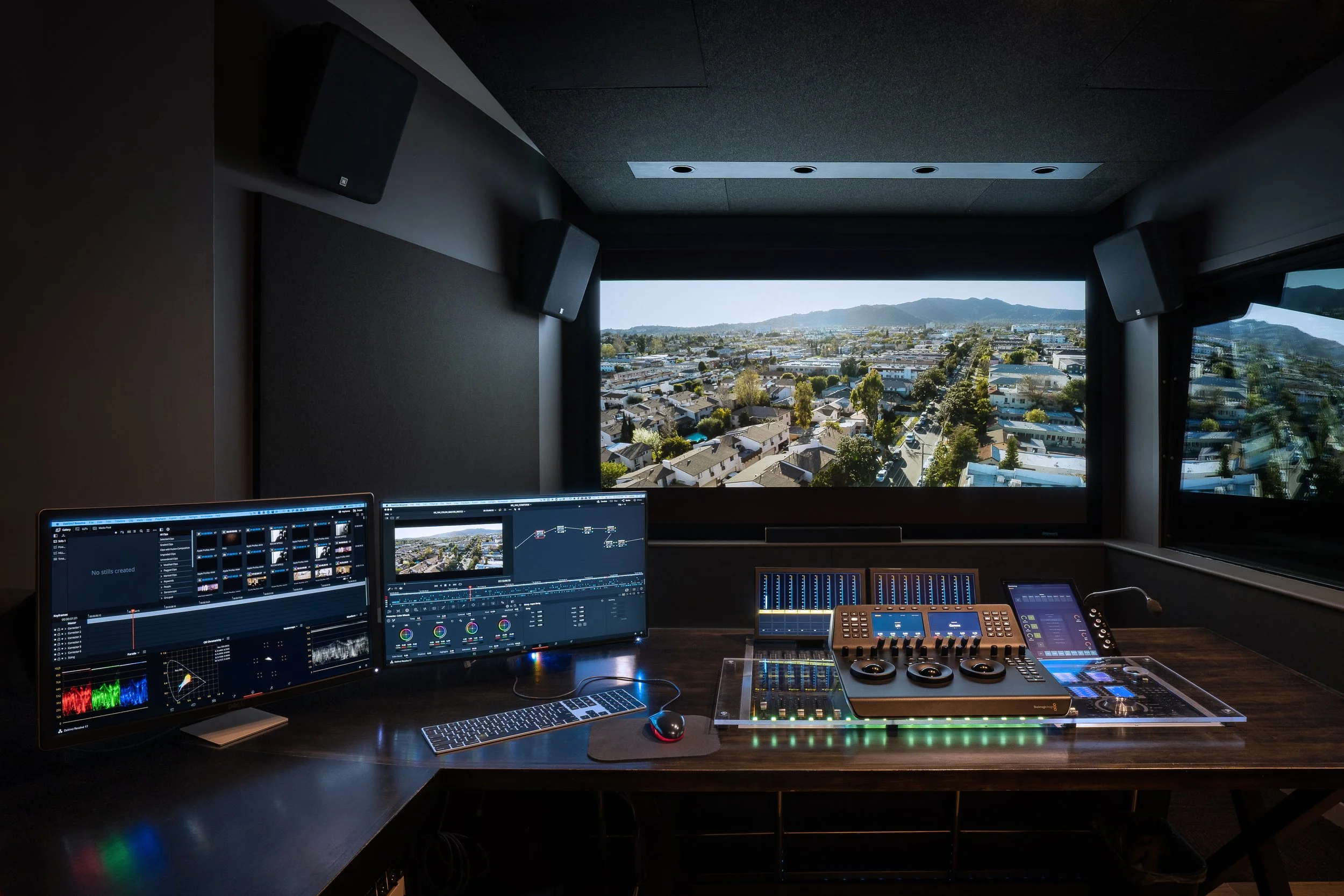
Blue Table Post’s Dolby-tuned theater in Brooklyn
The Debevoise films moved into Blue Table's theater for sound mixing and color grading, with Owett and Cohen attending the sessions in person with re-recording mixer Rich Cutler and colorist Christopher Young. The room is Dolby-tuned, with a nine-by-five-foot screen and a 4K laser projector—a very different environment from watching an edit on a laptop at home.
There's no reason for a remote workflow to require every part of post-production to happen remotely. For the Debevoise films, working remotely made sense during the edit. When it came time to make final decisions about sound and picture, everyone could sit together in the theater.
Wherever the work takes you
Likewise, the edit on The Maid of Orleans will shift as the production progresses: first the editor and assistant working remotely, then McClendon working from an edit room at Blue Table while McCarthy remains remote, and eventually both working on-site in separate rooms. If they need to screen for a larger group, the same project can simply be opened in the theater.
That's perhaps the most useful way to think about remote editing. It doesn't have to replace the edit room. It simply gives a production more freedom and flexibility about where the people need to be at different stages of the work and can help stretch a limited budget.
For The Maid of Orleans, that means a film can be shooting in Paris, its editor and assistant can be somewhere else, and the project can still have a home in Brooklyn.
Planning a remote or hybrid edit?
Every production works a little differently. Tell us what you’re working on and we’ll help you build a workflow that fits.